
YOUR GUT IS TALKING TO YOUR BRAIN, YOUR SKIN, AND YOUR ENERGY—AND MOST PEOPLE ARE IGNORING EVERY SIGNAL
The research on the gut microbiome is re-writing what we thought we knew about fatigue, inflammation, and mood — and one formula addresses all three pathways.

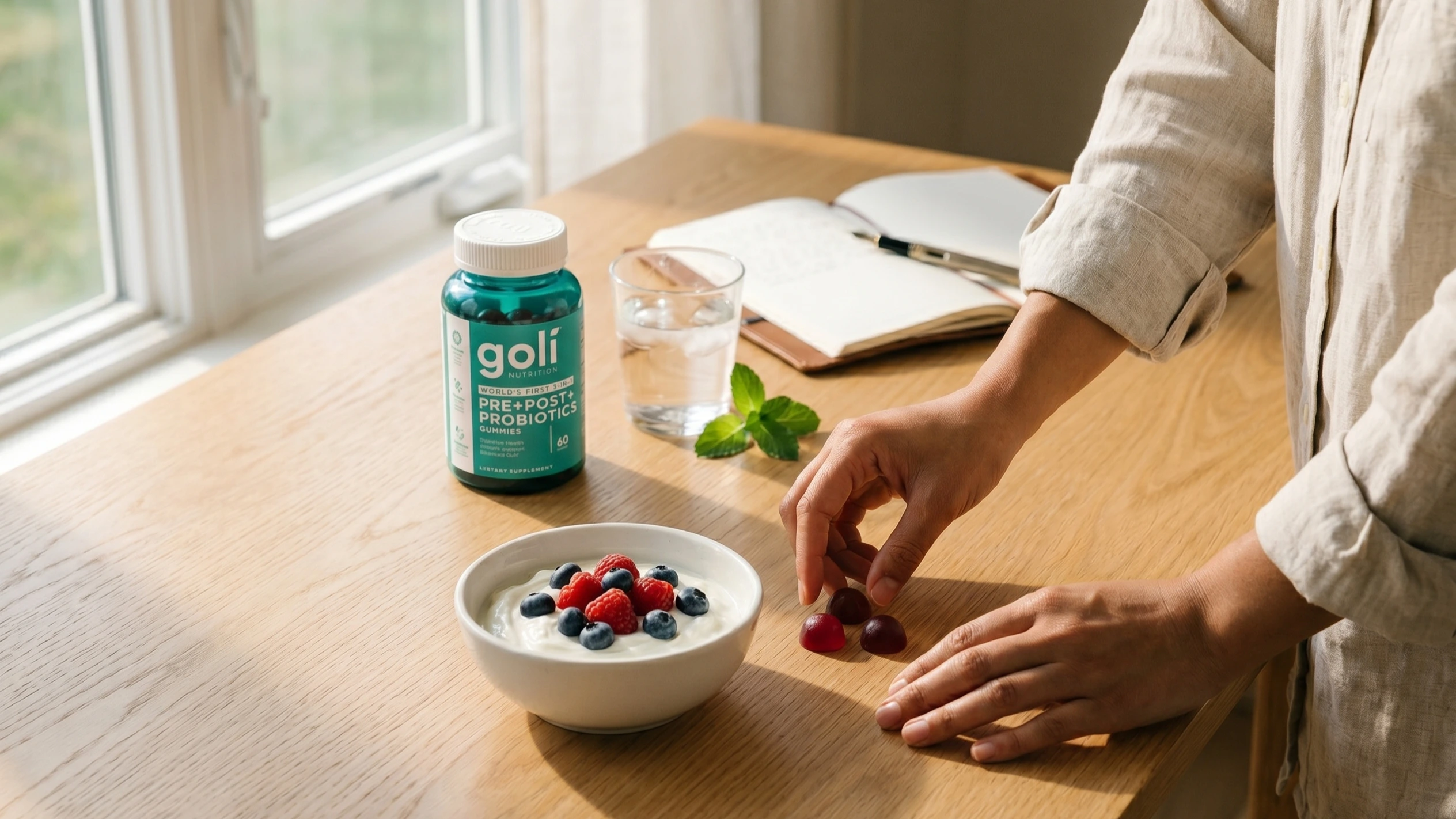
Most people think gut health is about digestion. It isn't — or at least, that's only a fraction of the story. Your gut houses nearly 70% of your entire immune system. It produces more than 90% of your body's serotonin. It communicates with your brain via a dedicated neural highway called the vagus nerve. What happens in the gut doesn't stay in the gut — it radiates outward in patterns most people spend years attributing to other causes.
The Downstream Signals
The gut tends to announce itself loudly only when something goes seriously wrong — the bloating, the cramping, the irregular days. But the upstream disruption that causes those symptoms usually started months or years earlier, expressing itself in subtler ways that most people never trace back to their source.
The persistent afternoon energy crash that coffee doesn't fully fix. The skin flare-ups that arrive without an obvious dietary trigger and leave just as unpredictably. The low-grade fogginess that descends mid-morning and sits over your thinking. The food sensitivities that developed in adulthood after years of eating the same foods without consequence. The mood instability that doesn't track with what's actually happening in your life.
These are gut signals — not because the gut is involved in everything as a vague wellness concept, but because the mechanisms are specific and documented. More than 90% of the body's serotonin — the primary neurotransmitter implicated in mood regulation, sleep architecture, and appetite — is produced by enterochromaffin cells in the gut lining, with the microbiota playing a direct regulatory role. The vagus nerve carries bidirectional signaling between gut and brain that affects cognitive clarity, stress response, and emotional regulation. And gut-associated lymphoid tissue (GALT) represents nearly 70% of the entire immune system — meaning the immune activity implicated in inflammatory skin conditions, chronic fatigue, and systemic inflammation is largely orchestrated from the gut.
"When the microbiome is disrupted, all of these pathways are affected simultaneously. The downstream symptoms look unrelated. The source is the same."
What Actually Lives in Your Gut
A landmark 2016 study published in PLOS Biology revised the longstanding estimate of gut bacteria: the human body harbors approximately 38 trillion bacterial cells, roughly equal to the number of human cells — a ratio near 1:1, not the "10 times more bacteria than human cells" figure that circulated for decades. The number is large; the diversity is what matters most.
A healthy microbiome contains hundreds of bacterial species, and that diversity is now understood as a primary marker of gut health. Different species colonize different regions of the digestive tract, perform different metabolic functions, and produce different compounds. Among the most valuable outputs: short-chain fatty acids (SCFAs) that feed the gut lining and regulate immune response, vitamin K and biotin, and the serotonin precursors that gut neurons convert into the neurotransmitters that downstream systems depend on.
The factors that disrupt this ecosystem are largely modern and largely common:
Antibiotics are the most acute disruptor. Research published in Nature Microbiology found that while the gut microbiome approaches near-baseline composition within 6 weeks after a course of antibiotics, 9 common bacterial species remained undetectable in most subjects even after 6 months. A PNAS study found that antibiotic disruption begins within 3 to 4 days of drug initiation, and that a second course causes greater disruption than the first — with incomplete recovery between courses.
Low-fiber diet is the chronic disruptor. A 2016 Nature study from Stanford's Sonnenburg lab found that a low-fiber diet causes progressive extinction of gut bacteria, with diversity falling 72% by the fourth generation on low-fiber intake — losses that were not recoverable by diet alone without reintroduction of the missing species. Western dietary patterns, which are systematically low in the fermentable plant fibers that gut bacteria depend on, are the primary driver of the microbiome depletion that precedes most gut-downstream symptoms.
Chronic stress and sleep disruption compound the effect. Cortisol directly alters microbiome composition. Disrupted sleep changes the diurnal rhythms that gut bacteria rely on for activity cycling. The result is a multi-front disruption that most lifestyle interventions address partially at best.
The Three-Stage Problem
Most probiotic products fail not because probiotics don't work — but because they address one-third of the problem and call it solved.
The gut ecosystem requires three distinct inputs to function, and each depends on the others.
Stage 1 — Prebiotic (fuel): Probiotic bacteria need specific fermentable fibers to survive and proliferate in the gut. Without prebiotic substrate, even well-formulated probiotic strains arrive and die within days. XOS (xylooligosaccharides), the prebiotic in Goli's formula, is among the most selective available. A double-blind, randomized, placebo-controlled human trial found XOS increased Bifidobacterium counts in healthy adults without increasing Lactobacillus — a precision that distinguishes it from broader-spectrum prebiotics like inulin or FOS, which feed a wider range of bacteria including potentially harmful ones.
Stage 2 — Probiotic (live bacteria): The delivery problem for probiotics is stomach acid. The pH of the stomach is low enough to kill the majority of probiotic strains before they reach the intestine where colonization occurs. Spore-forming bacteria are the exception: their natural protective shell — the spore — survives gastric transit and germinates in the intestinal environment. A human study confirmed that Bacillus subtilis DE111 germinates in the small intestinal tract. A published RCT documented DE111's effects on gastrointestinal symptoms and immune markers in healthy adults. According to manufacturer ADM, more than 30 studies (in vitro and human) have been conducted on DE111 — making it one of the more extensively studied spore-forming probiotic strains commercially available.
Stage 3 — Postbiotic (metabolic output): Postbiotics are the compounds that beneficial bacteria produce: short-chain fatty acids, bacteriocins, and immune-signaling molecules including IgA stimulators. These compounds have value independent of whether live bacteria are present — they provide immune support for individuals whose gut environment is too disrupted to sustain live cultures effectively. The MCC1849 postbiotic in Goli's formula is heat-stable, meaning it remains active at room temperature without refrigeration and tolerates the variation in gut conditions that would inactivate live bacteria.
Most supplements on the market provide Stage 2 only. A few add Stage 1. Goli's formula is designed around all three stages simultaneously — addressing fuel, live bacteria, and metabolic output as an integrated system rather than isolated inputs.
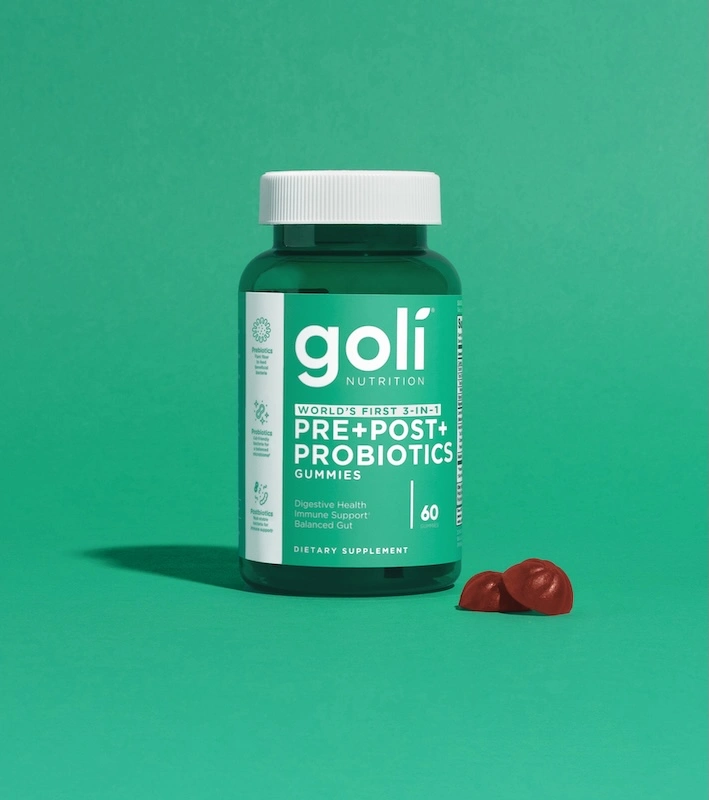
Goli® Pre+Post+Probiotic Gummies
- check_circle World's first 3-in-1 Pre+Post+Probiotic gummy formula
- check_circle Clinically-studied DE111 Bacillus subtilis spore strain
- check_circle Shelf-stable, Vegan & Gluten-Free
The Research — Specific Citations
The science supporting each component of this formula is specific and published.
On DE111 (Bacillus subtilis): Published in the International Journal of Molecular Sciences, a randomized double-blind placebo-controlled study found DE111 supplementation improved gastrointestinal symptoms and increased anti-inflammatory immune markers in healthy adults. A separate human trial confirmed DE111's spore-form germinates in the small intestine within hours of ingestion — mechanistically establishing how the strain reaches and colonizes the intestinal environment that liquid-form and capsule probiotics fail to reach.
On XOS: The human RCT evidence confirms dose-dependent selective increases in Bifidobacterium — one of the most beneficial and commonly depleted bacterial families — at doses comparable to those in the formula. The selectivity of XOS for Bifidobacterium, rather than broader microbial stimulation, is what makes it relevant for targeted microbiome restoration rather than general prebiotic feeding.
On the gut-brain and gut-immune pathways: The Yano et al. Cell study established the microbiota's direct regulatory role in gut serotonin biosynthesis — not merely correlation but mechanism. The Vighi et al. paper documenting GALT as nearly 70% of the entire immune system provides the mechanistic basis for the connection between gut microbiome disruption and systemic inflammatory patterns, including those expressed in the skin.
Honest limitation note: The clinical studies on DE111 use the isolated strain in capsule or powder form. Gummy format bioavailability for probiotic strains is assumed comparable but has not been studied in direct head-to-head comparison with capsule format. The spore-forming mechanism provides some additional protection against format-related degradation that liquid-format and non-spore strains lack, but this is not a claim the current literature can fully substantiate for the specific gummy format.
Why Gummy Format Matters
Gut health is a sustained-intervention problem. Research shows measurable microbiome composition shifts beginning at 2 to 4 weeks of consistent supplementation — and the shifts that matter for downstream symptoms (energy, skin, immunity) build over 4 to 8 weeks. Format is not a trivial consideration: the supplement that fits into daily life is the supplement that actually gets taken.
Probiotic capsules solve the delivery problem but add their own friction: many require refrigeration, the experience of swallowing them is neutral at best, and nothing about the format reinforces the habit. Goli's formula is shelf-stable — DE111's spore-forming nature means no cold chain is required — which removes one of the most common reasons people let probiotic bottles sit unused on a counter.
Three gummies per day at any time, no refrigeration, no measuring. Non-GMO, certified gluten-free, vegan, gelatin-free, free of synthetic colors and artificial flavors. Made in a cGMP-certified, allergen-free facility in the United States.
The formula specs per serving (3 gummies): 10mg Bacillus subtilis DE111, 50mg XOS prebiotic, 20mg MCC1849 heat-stable postbiotic. One bottle of 60 gummies is a 20-day supply at the recommended daily dose.
Who This Is For
The case for this formula is strongest for people whose pattern matches one or more of the following:
- Persistent bloating after meals — particularly after eating fiber-rich foods, legumes, or dairy, which suggests microbiome imbalance rather than food intolerance.
- Chronic afternoon energy crashes without obvious cause — given serotonin's role in energy regulation and the gut's role in serotonin production, the gut-energy connection is mechanistically grounded and often overlooked.
- Skin flare-ups without clear dietary trigger — the gut-skin axis is one of the most research-supported downstream effects of microbiome disruption, with inflammatory cytokines from a dysbiotic gut reaching skin tissue via systemic circulation.
- Recent or recurring antibiotic use — research confirms that recovery from a single antibiotic course can be incomplete at 6 months for some bacterial species. Targeted probiotic + prebiotic supplementation is the most evidence-supported intervention for accelerating restoration.
- Low-fiber dietary history — if your diet is vegetable-poor and processed-food-heavy, Bifidobacterium and other beneficial bacteria are likely depleted at baseline. XOS's selectivity for Bifidobacterium is directly relevant here.
Reasonable caution applies for: severe digestive conditions (IBS, IBD, SIBO) — these warrant a doctor's guidance before adding probiotics. Those on immunosuppressants should consult a physician, as probiotics interact with immune-modulating medications. Recent abdominal surgery and active infection are also situations requiring medical input first.
Gut health isn't a quick fix. A 20-day supply is a starting point, not a resolution. What this formula provides is a clean, research-backed daily foundation — prebiotic fuel, a clinically studied spore-forming strain, and heat-stable postbiotic immune support — in a format simple enough to maintain for the 4 to 8 weeks where the evidence shows meaningful shifts occurring.
Clinical Q&A
How long before I notice results? expand_more
Will my bloating get worse before it gets better? expand_more
Can I take this alongside other supplements or medications? expand_more
Is this safe during pregnancy or breastfeeding? expand_more
What's the return policy? expand_more
What Users Actually Report
"I started these after a 10-day antibiotic course wrecked my digestion — I'd read that gut recovery after antibiotics can take months and wanted to give it a proper shot rather than just wait it out. Three weeks in and the bloating and irregularity are gone. My energy is back to baseline, which I hadn't expected to connect to gut health until I noticed the pattern. Taking these every morning now as a baseline habit."
— Review via Amazon"I've struggled with digestive issues for years and tried multiple probiotic brands. The combination of pre, pro, and postbiotic is the first formulation that actually made sense to me — most products skip two of the three steps. Less bloating after meals, more regular digestion, and noticeably less of the afternoon energy slump I'd written off as just how I was. Four weeks in and I'll be reordering."
— Review via Goli.com"Started for digestion but the two things I noticed most were skin and mood. My skin has been clearer in the past six weeks than it's been in years — I'd never connected it to gut health before but the gut-skin research makes sense in retrospect. I also feel more even-keeled through the day, less of the low-grade irritability that used to show up mid-afternoon. The format makes it an easy daily habit — three gummies in the morning and done."
— Review via iHerbRebuild the Foundation Most Wellness Trends Skip
Pre + Pro + Postbiotic in one gummy. Clinically-studied DE111 strain. Shelf-stable. 30-day guarantee.
30-day money-back guarantee · Free shipping available
We earn a commission at no extra cost to you